
Scott County Kentucky Probate Records
Scott County sits in the heart of the Bluegrass Region. The county seat is Georgetown. Probate court records here date back to the late 1700s. These files hold wills, estate inventories, and guardianship papers. The Circuit Court Clerk keeps all court documents. The County Clerk records wills after probate ends. Records from this area help families trace their roots. They also settle estate matters today.
Scott County Quick Facts
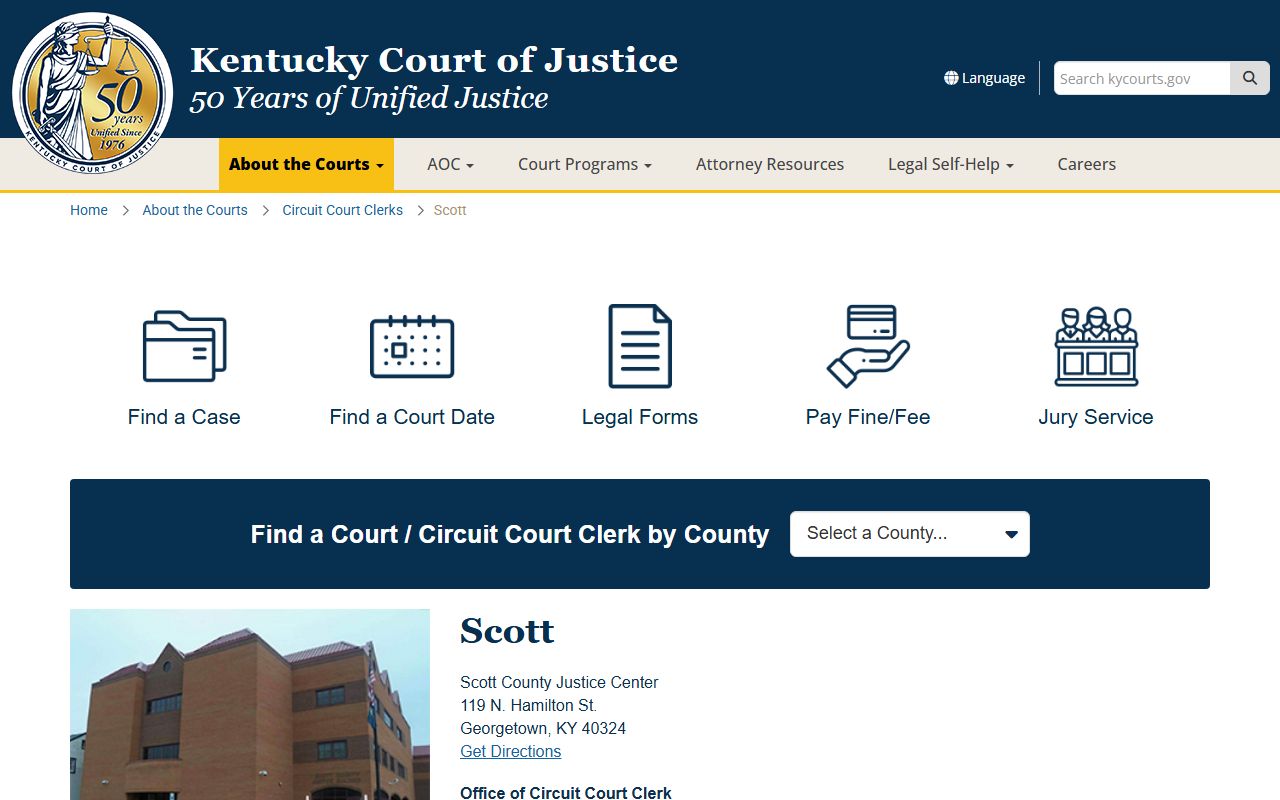
Scott County Circuit Court Clerk Probate Office
The Scott County Circuit Court Clerk manages all probate court records. This office sits in the courthouse in Georgetown. Staff handle filings for estates, wills, and guardianships. They also keep records for name changes and conservatorships. The clerk is the custodian of court records under Kentucky law. You can visit the office to view case files. Staff can help you find the records you need.
| Office | Scott County Circuit Court Clerk |
|---|---|
| Address |
Scott County Courthouse 101 E Main Street Georgetown, KY 40324 |
| Phone | (502) 863-0474 |
| Hours | Monday through Friday, 8:30 AM to 4:30 PM |
| Website | kycourts.gov/Scott |
How to Search Scott County Probate Court Records
You have options for finding probate records in Scott County. The method you pick depends on what you need. Some searches are quick. Others need more time. All are open to the public.
Kentucky CourtNet 2.0 lets you search online. This system holds case data from across the state. You can look up Scott County probate cases by name. You can also search by case number. Visit kcoj.kycourts.net to start your search. This free tool shows basic case facts. It does not show full documents.
To search Scott County probate records, you need:
- Full name of the deceased
- Year of death or case filing
- Case number if you have it
For full copies of wills or estate papers, visit the clerk in Georgetown. The staff can pull files and make copies. Bring a valid photo ID. Copies cost a small fee per page. Certified copies cost more. Call ahead at (502) 863-0474 to check if records are on site. Old records may be at the State Records Center.
Scott County Probate Filing Process
Probate cases in Scott County follow Kentucky law. The process starts when someone dies. Their estate must be settled. The court oversees this work. Records are created at each step.
To open a probate case in Scott County, file a petition with the Circuit Court Clerk. Use Form AOC-805 for standard estates. Small estates may use Form AOC-830. This is the Petition to Dispense with Administration. It works for estates worth $30,000 or less. The filing fee varies by case type.
The court appoints an executor or administrator. This person manages the estate. They gather assets. They pay debts. They file reports with the court. Under KRS 395.040, notice must be given to heirs and creditors. The creditor claim period lasts six months. The estate cannot close before this time ends.
Final settlement closes the case. The executor files a final account. The court reviews it. If all is correct, the court approves it. The estate is then closed. All records remain on file with the Scott County Circuit Court Clerk.
Scott County Probate Records Contents
Probate records in Scott County hold many types of documents. Wills are the most common. A will states who gets the deceased's property. It may name a guardian for minor children. It may also name an executor to manage the estate.
Estate inventories list all assets. These include real estate, bank accounts, and personal items. Appraisals set the value of these items. Debts and claims against the estate are also recorded. All of this becomes part of the public record in Scott County.
Guardianship records are filed when minors inherit. These records track the care of children. They also track their funds. Conservatorships protect adults who cannot manage their own affairs. Both types of cases are part of Scott County probate court records.
Scott County probate records are public under KRS 61.870. Anyone can view them. You do not need to be related to the deceased. Some details may be redacted. Social Security numbers are kept private. So are some financial account numbers.
Scott County Clerk Records
The Scott County Clerk plays a key role in probate. This office records wills after probate ends. They also keep land records. These may relate to estate property. The County Clerk does not keep court case files. Those stay with the Circuit Court Clerk.
You may need County Clerk records to trace property. Deeds show transfers of real estate. Mortgages show liens on property. These records help settle estate matters. They also help with title searches.

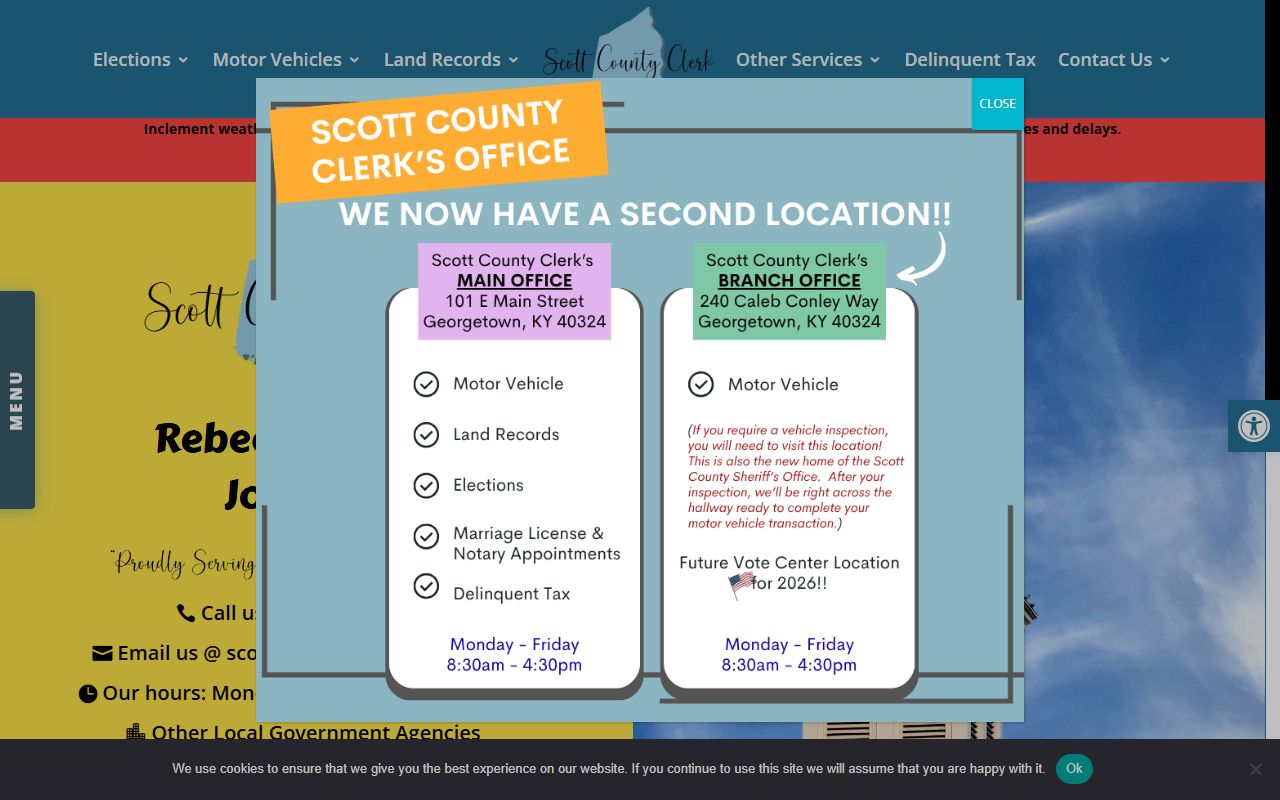
The Scott County Clerk's office is at 101 E Main Street in Georgetown. Call (502) 863-0474 for more details. You can also visit their website for online records access through the eCCLIX system.
Historical Scott County Probate Records
Scott County was founded in 1792. Probate records from the early days still exist. These old files are rich with history. They name early settlers. They list property owned long ago. They show how families lived and died.
Records over 36 years old are at the Kentucky Department for Libraries and Archives (KDLA). This is in Frankfort. You can visit in person. You can also submit a request by mail. The fee is $10 for in-state requests. Out-of-state requests cost $15. Contact KDLA at (502) 564-8300 for help.
Records from 15 to 35 years old are at the State Records Center. Email state.records@ky.gov to request these files. Include the case number if you have it. Allow time for staff to pull the records.
Cities in Scott County
Georgetown is the largest city in Scott County. It is also the county seat. All probate cases for Scott County residents are filed here. The Circuit Court Clerk serves the entire county from this location.
Other communities in Scott County include Stamping Ground and Sadieville. Residents of all areas file probate matters at the Georgetown courthouse.
Nearby Counties
These counties neighbor Scott County. Probate records must be filed in the county where the deceased lived. Check the address at time of death to find the right court.